Rural King-style new-store programs: what vendors need to know
Rural King-style new-store programs require vendors to align supplier onboarding, EDI 850 purchase orders, EDI 856 advance ship notices, and physical delivery dates around a fixed store set date. Because regional farm-and-home chains open stores in waves across multiple states, setting an internal ship-by target 14 days before the set date prevents field merchandising crews from arriving to empty bays.
Key facts
- Rural King reached 150 stores in April 2026 with its Sebring, Florida opening and expanded across 17 states including new North Carolina locations in 2026. Source: sgbonline.com
- Rural King uses RangeMe to source and review prospective product suppliers across farm, home, hardware, pet, and outdoor categories. Source: rangeme.com
- EDI 850 transmits the initial purchase order, while EDI 856 communicates advance ship notices, carton markings, and carrier tracking ahead of delivery. Source: x12.org
On this page
How do Rural King-style new-store opening programs work?
Rural King-style new-store opening programs coordinate buyer assortment awards, initial store-stocking purchase orders, inbound LTL and parcel freight, and physical aisle resets across dozens or hundreds of vendors ahead of a public grand opening. Within the operational framework outlined in our new-store set operations guide, regional farm-and-home retail expansions combine tight receiving windows with coordinated field merchandising crews.
To put the scale of regional farm retail expansion in context, SGB Media Online reported in April 2026 that Rural King celebrated its 150th store in Sebring, Florida, operating across 17 states. Later in 2026, a PR Newswire release from Rural King announced another North Carolina opening in Greensboro. Each new store opening represents a coordinated wave where hardware, livestock supply, pet, workwear, tool, and outdoor equipment vendors all have to land initial inventory inside the same multi-week buildout window.
At the front end of the funnel, Rural King’s RangeMe supplier portal serves as a primary discovery path where merchandise buyers review prospective brands and item lines. Once a brand wins space on the planogram, execution shifts quickly from sales pitching to logistics discipline: EDI testing, purchase order verification, carton labeling, and delivery tracking ahead of the store’s scheduled set date.
How do vendors qualify and onboard before a new-store wave starts?
Vendors qualify for regional farm-and-home retail programs by submitting complete product, barcode, and packaging specifications through buyer portals such as RangeMe and finishing EDI and routing-guide setup weeks before initial store purchase orders arrive. Starting EDI testing only after a buyer awards a new store opening almost always leads to late first shipments.
In general, pre-wave vendor onboarding covers four preparation steps:
- Lock item and case-pack master data. Verify every awarded SKU carries a valid GTIN/UPC barcode, exact inner-pack and master-carton quantities, net wholesale cost, and pallet TI/HI dimensions matching the buyer’s award sheet.
- Audit the retailer’s routing guide from the back forward. As SPS Commerce’s routing guide analysis notes, retail routing guides commonly run 60 to 200 pages and place financial chargeback appendices at the back—highlighting exactly which late-ASN, appointment, or carton-label misses carry deductions.
- Complete EDI 850, 855, 856, and 810 testing. Confirm your ERP or EDI provider receives purchase orders (850), sends timely acknowledgments (855) and advance ship notices (856), and submits clean invoices (810) without syntax errors before live store POs drop.
- Test GS1-128 / SSCC-18 logistics labels. Per GS1 US’s SSCC documentation, each pallet or carton label encodes an 18-digit Serial Shipping Container Code (SSCC) in a GS1-128 barcode that acts as a license plate tying physical freight directly to the electronic EDI 856 ASN.
What timeline separates PO receipt, ship-by date, and set date?
Every new-store set works backward from the physical set date—the week merchandising crews arrive to build fixtures, stock bays, and hang signage. Treating the store’s grand-opening weekend as your freight deadline leads directly to late product; freight has to clear receiving and sit ready in staging before the set crew walks in the door.
| Milestone | Typical target window | Operational owner | What breaks if missed |
|---|---|---|---|
| Onboarding & EDI testing | 45–60+ days before set | Vendor EDI / Ops lead | POs fail syntax checks or stall in manual entry |
| Initial PO issued (EDI 850) | 25–35 days before set | Retail buyer / replenishment | Missing PO leaves store bay unassigned |
| Internal ship-by target | Set date minus 14 days | Vendor warehouse / CSR | Transit delays push arrival past set week |
| ASN sent (EDI 856) & tracking | Same day as carrier pickup | Vendor logistics / WMS | Receiving team cannot match pallets to PO |
| Backroom arrival & staging | 3–5 days before set | Store receiving / carrier | Set team stalls hunting unreceived boxes |
| Physical store set week | Target set date | Field merchandising crew | Empty facings logged as exceptions |
Using a firm set date minus 14 days internal ship-by milestone gives vendors and program managers a clear early-warning line. When a vendor has not confirmed a ship date or tracking number by that cutoff, the program manager still has two weeks to escalate before field reps arrive at the building. Follow the step-by-step sequence in our new-store set checklist to keep every milestone visible across multiple store waves.
What do EDI, labeling, and routing guides require on initial store shipments?
Retailers running multi-store expansions rely on standardized electronic documents and strict routing guides so store receivers do not have to decipher handwritten packing slips across 50 incoming trucks. As outlined in SPS Commerce’s EDI setup guide, onboarding and testing verify that a vendor’s ERP or EDI provider exchanges clean transactions before live orders flow.
Four core compliance pieces matter most on initial store-opening shipments:
- EDI 850 (Purchase Order) accuracy. Confirm that ship-to store numbers, SKU case-pack counts, and unit costs match your quote sheet immediately upon PO receipt rather than waiting until warehouse pick day.
- EDI 856 (Ship Notice/Manifest). Per the X12 856 transaction standard, the advance ship notice links carrier routing, tracking numbers, carton counts, and item contents back to the original PO before the truck arrives at the dock.
- Carton and pallet markings. Store-opening freight often shares staging areas with fixture contractors and seasonal resets. Clear store-number labels, PO numbers, and scannable carton barcodes prevent pallets from disappearing behind fixtures.
- Direct-to-store vs. distribution center routing. Follow the retailer’s routing guide strictly on whether initial sets ship directly to the new store address or cross-dock through a regional DC.
Building clean habits around vendor compliance for retail programs protects vendor margins from preventable dock chargebacks and keeps buyer relationships strong during an account’s first opening cycle.
Why do store-level stockouts happen on grand-opening week?
Grand-opening stockouts rarely happen because a buyer forgot to order the category; they happen because small gaps between PO confirmation, carrier handoff, and backroom receiving compound across dozens of suppliers.
The most common failure points include:
- Silent missing POs. One store in a five-store opening wave never gets a PO generated due to a store-code setup lag, and nobody notices until the set crew reaches the aisle.
- Due dates after the set date. Automated ERP replenishment defaults assign a standard delivery window that lands three days after the merchandising crew is scheduled to leave town.
- Unlinked tracking numbers. Freight actually shipped on time, but the vendor sent tracking inside an email reply rather than an ASN, leaving the field team unable to tell if product is on the dock or still in a terminal.
- Backordered endcap displays. Inline items arrive on schedule while promotional endcaps or display shippers ship two weeks later, leaving prime focal space empty on opening weekend.
What should a vendor or program manager track across every opening store?
Managing a multi-store program cleanly requires one shared view organized by Store x Vendor, not scattered Outlook folders and ad-hoc carrier tabs. At minimum, every active opening store row should track:
- Store ID, city, and set date
- Awarded vendor and SKU/display scope
- PO number and PO status (received vs. missing)
- Ship-by cutoff (
set date minus 14 days) and promised due date - Carrier, tracking number, and exception flags (missing PO, missing tracking, due date after set date, or ship date outside the window)
How do store set week and grand-opening verification work on the ground?
During store set week, contracted field merchandising crews or store teams pull staged vendor pallets out of the backroom, assemble bay fixtures, stock awarded facings to planogram, and log missing or damaged SKUs. Vendors that treat delivery confirmation as the finish line often miss receiving bottlenecks that leave shelves bare on opening weekend.
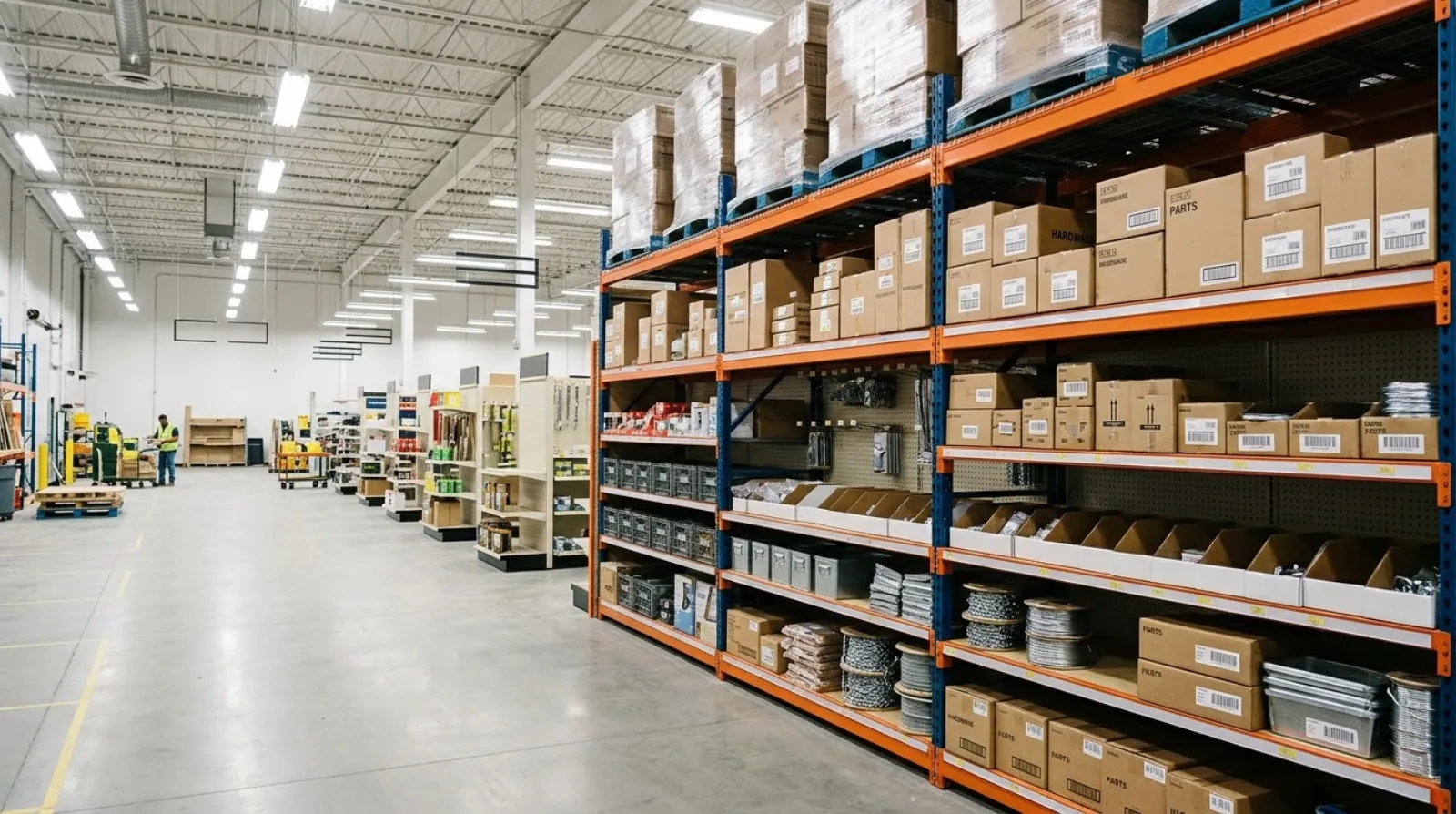
Unlike established stores with daily backroom routines, a newly constructed or remodeled building handles fixture deliveries, racking installers, and hundreds of vendor cartons in the same temporary staging bays. If a pallet lacks clear store-number and PO markings on all four sides, set crews can walk past it while logging the SKU as missing. Field teams and brand reps commonly document completed bays using a structured store visit report template and prefilled spot-check sheet to confirm three physical checks before opening day:
- Pallet-to-shelf completion: Every awarded SKU moved from receiving staging onto its assigned planogram facing.
- Pricing and shelf-tag accuracy: Store shelf tags match the awarded retail price and item number.
- Display and endcap assembly: Promotional shippers and endcap headers arrived alongside inline stock rather than trailing in a backordered parcel.
How do regional farm-and-home rollouts differ from national big-box chains?
Regional farm-and-home expansion programs differ from national big-box chains in store wave cadence, direct-to-store vs. distribution-center delivery splits, and vendor portal tooling. Vendors accustomed only to automated national DC replenishment often underestimate how much manual coordination a regional opening wave demands.
| Operational factor | Regional farm-and-home new-store wave | National big-box replenishment |
|---|---|---|
| Expansion cadence | Periodic waves across regional states | Continuous weekly resets and automated store replenishment |
| Receiving setup | Temporary staging docks, mixed fixture and merchandise freight | Established regional DCs and permanent store receiving teams |
| Freight routing mix | Often combines DC cross-dock and direct-to-store LTL deliveries | Predominantly DC-routed with strict appointment portals |
| Vendor tracking burden | Program teams often reconcile EDI, emails, and portal CSVs together | Standardized portal dashboards across thousands of locations |
Before the first PO drops for an upcoming wave, vendor operations teams should run a quick readiness check:
- Verify every ship-to store address and dock-receiving window against your carrier transit-day map.
- Confirm
set date minus 14 daysdeadlines in your warehouse pick queue so opening orders outrank routine stock replenishment. - Separate promotional endcap displays from inline SKU picks so neither ships late silently.
- Assign one operations contact to monitor tracking exceptions every 48 hours after the ship-by cutoff.
- Plan post-launch stock and monthly sell-through reporting once opening-week sales begin.
Once opening week wraps and the doors open to shoppers, tracking should shift from inbound freight to ongoing farm and ranch retail coverage monitoring so brands see which stores stay stocked after the grand-opening rush. If your field-service team or vendor program still reconciles store-opening POs across spreadsheets and inbox searches, explore our new-store-set PO and shipment tracking overview or see what to evaluate in purchase order tracking software for field teams.
Frequently asked questions
How do regional farm-and-home chains like Rural King onboard new suppliers?
Rural King directs prospective suppliers through RangeMe for initial product discovery and buyer review across hardware, farm, pet, and outdoor categories. Once selected, suppliers typically complete EDI setup and testing for standard documents such as 850 purchase orders, 856 advance ship notices, and 810 invoices before shipping to stores.
Why is set date minus 14 days a common ship-by rule for new-store sets?
Freight arriving on the exact morning a merchandising team begins setting aisles creates dock congestion and stalls resets. Setting an internal ship-by cutoff 14 days before the physical set date leaves room for LTL transit, carrier delays, backroom receiving, and pallet staging before crews arrive.
What is the biggest operational risk for vendors during a multi-store opening wave?
Partial or missing initial purchase orders on high-visibility launch items create empty planogram bays on grand-opening weekend. When one vendor ships late or sends freight without tracking tied to the right store number, store teams cannot locate pallets in staging and field reps have to log incomplete sets.
How does a new-store set differ from standard store replenishment?
Standard replenishment replaces sold units inside an established planogram with active store receiving routines. A new-store set delivers an entire initial assortment across hundreds of vendors at once into an unstocked building or newly remodeled store, often coordinated with contracted field merchandising teams working on a strict calendar.
What should a vendor monitor after a new store opens?
Once the store opens, shift focus from inbound freight tracking to shelf coverage and early sell-through checks. Confirm that every awarded SKU actually made it from receiving to the sales floor, verify shelf tags and pricing match buyer expectations, and monitor early reorder velocity so opening-week demand does not cause immediate stockouts.
Do regional farm-and-home store openings ship direct to store or through a distribution center?
Regional chains may route initial new-store allocations either direct to the opening store dock or through a regional distribution center depending on category, pallet volume, and carrier rules. Vendors must check the current routing guide and EDI 850 ship-to address on every PO rather than assuming standard replenishment routing applies.
Sources
- Rural King Celebrates Grand Opening of 150th Store | SGB Media Online (checked )
- Rural King Continues North Carolina Growth with new Greensboro Location | PR Newswire (checked )
- Become a Supplier for Rural King | RangeMe (checked )
- 856 Ship Notice/Manifest Transaction Set | X12 (checked )
- How to Set Up EDI | SPS Commerce (checked )
- How to Read a Routing Guide Without Missing the Rules That Cost You | SPS Commerce (checked )
- Serialized Shipping Container Codes (SSCC) | GS1 US (checked )